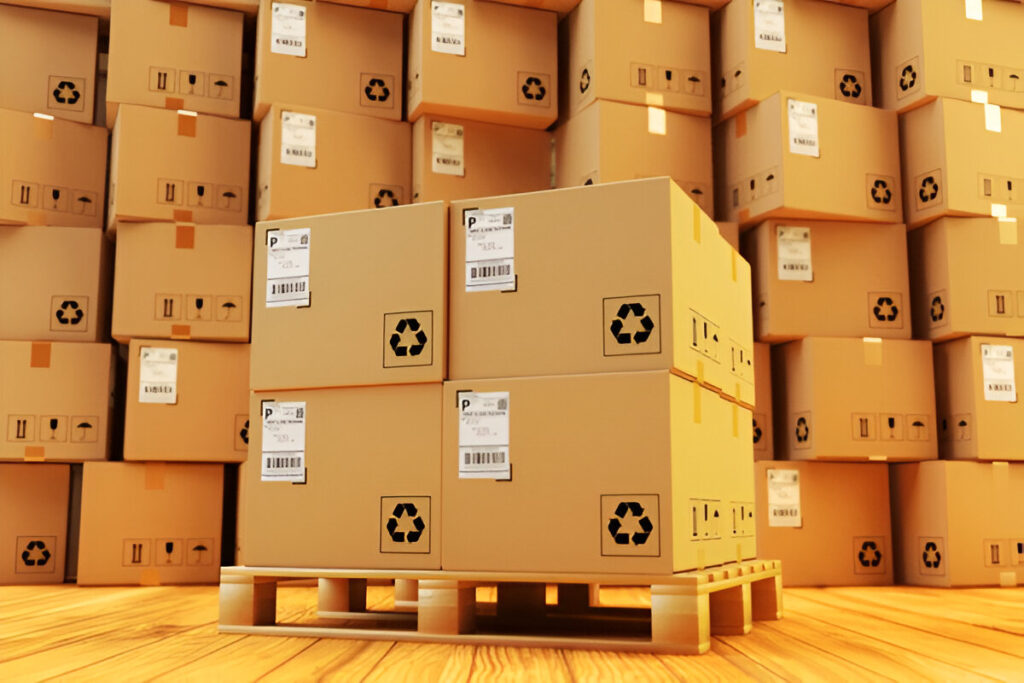
packaging to reduce food waste
Food waste is a major challenge across the global food supply chain. Food can be lost or damaged during production, transportation, storage, distribution and retail.
While packaging is sometimes seen simply as a way to contain or present a product, its role can be much more important.
Well-designed packaging can help protect products from damage, contamination and environmental conditions while making transportation and storage more efficient.
But there is an important principle:
Good packaging is not about using more packaging. It is about using the right packaging for the product, supply chain and required shelf life.
For food manufacturers and packaging companies, this approach can reduce product losses while also avoiding unnecessary material consumption.
What Is the Relationship Between Packaging and Food Waste?
Food products can deteriorate for many different reasons.
Depending on the product and supply chain, losses may occur because of:
- Physical damage
- Poor handling
- Inadequate storage
- Temperature conditions
- Moisture
- Contamination
- Delayed transportation
- Poor packaging design Insufficient protection during distribution
Packaging cannot solve every one of these problems, but the right packaging system can help address some of the risks.
For example, a package may be designed to protect the product from physical damage during transportation.
Similarly, appropriate packaging can help maintain product quality during the expected logistics and storage period.
Therefore, packaging should be considered as part of the complete product and supply chain system.
Packaging Is More Than a Box
When people think about packaging, they often think about:
Box + Printing + Branding
But packaging performs several important functions.
A packaging system can help with:
Protection
Protecting the product from physical damage during handling and transportation.
Containment
Keeping the product together and preventing leakage, spillage or loss where applicable.
Communication
Providing information such as product details, handling instructions and branding.
Logistics
Making products easier to stack, transport, store and distribute.
Convenience
Helping consumers open, handle, use and sometimes reseal products.
Waste Reduction
Reducing the possibility of product damage or premature loss.
This is why packaging design should be considered from a broader perspective than appearance alone.
Can Better Packaging Increase Shelf Life?
The answer depends on the product and the packaging system.
Packaging can contribute to maintaining product quality for the required period, but not every packaging material or box automatically extends shelf life.
Shelf life can be influenced by factors such as:
- Product formulation
- Processing
- Temperature
- Humidity
- Microbial conditions
- Oxygen exposure
- Light exposure
- Moisture transfer
- Packaging structure
- Storage conditions
- Transportation time
Advanced food-packaging systems may use specialized technologies to control some of these factors.
However, the appropriate technology depends entirely on the product.
For example, a dry food product and a fresh food product may require completely different packaging solutions.
The Goal Should Be the Right Shelf Life
One of the most important ideas in sustainable packaging is:
Packaging should be designed according to the actual logistical requirement of the product.
Suppose a product normally reaches the consumer within two weeks.
Designing a packaging system specifically for a two-year shelf life may involve unnecessary materials, technologies and costs if the product does not actually need that extended shelf life.
On the other hand, if a product requires several months of transportation and storage, insufficient packaging protection could result in product loss.
Therefore, the objective should not simply be:
“Make the shelf life as long as possible.”
Instead, the objective should be:
“Provide the required protection for the actual supply-chain journey.”
Why Over-Engineering Packaging Can Be a Problem
More packaging does not automatically mean more sustainability.
A package can be over-engineered by using:
- Excessive material
- Unnecessary layers
- Unnecessary protective components
- Packaging designed for a much longer life than required
- Materials that are difficult to recover or recycle
This can increase:
- Material consumption
- Packaging cost
- Transportation weight
- Production complexity
- Waste
A sustainable packaging strategy therefore requires a balance between product protection and resource efficiency.
Packaging Should Match the Supply Chain
Every food product has a different journey.
For example:
Manufacturer → Distributor → Warehouse → Retailer → Consumer
Another product may have:
Farmer → Collection Centre → Local Market → Consumer
The risks at each stage can be completely different.
A packaging solution that works well in one supply chain may not be suitable for another.
This is why packaging design should consider:
- Transportation distance
- Handling practices
- Storage infrastructure
- Climate
- Humidity
- Temperature
- Distribution time
- Packaging equipment
- Retail conditions
- Consumer usage
ective than a highly sophisticated technology that cannot be implemented at scale.
The Role of Paperboard Packaging
Paperboard plays an important role in many food and retail packaging applications.
Materials such as duplex board can be used to manufacture:
- Food cartons
- Cake boxes
- Dry-food cartons
- Sweet boxes
- FMCG cartons
- Retail packaging
- Secondary packaging
For these applications, board selection can influence:
- Structural strength
- Printing quality
- Folding
- Creasing
- Die cutting
- Gluing
- Handling
- Protection during distribution
However, it is important to distinguish between secondary/outer packaging protection and specialized primary food-packaging barrier systems.
A printed duplex board carton should not automatically be considered a barrier package for oxygen, moisture or other shelf-life factors.
The complete packaging structure must be evaluated for the intended food application.
Packaging Protection Can Reduce Food Loss
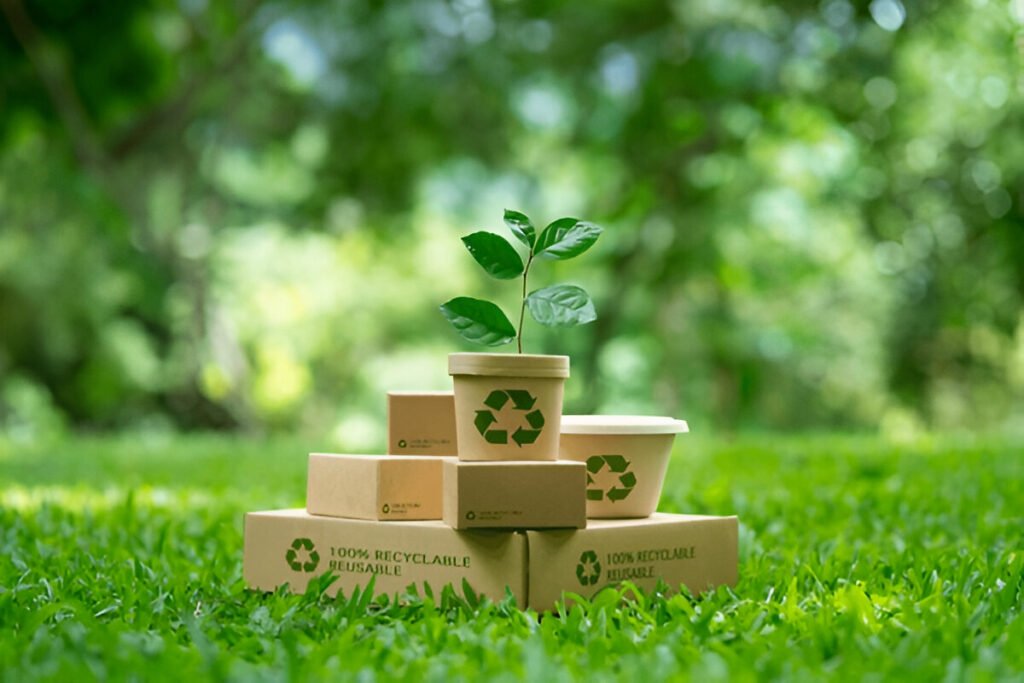
Consider a product that is perfectly safe and high quality when it leaves the manufacturer.
If the package fails during transportation and the product becomes:
- Crushed
- Damaged
- Contaminated
- Leaking
- Unsuitable for sale
the food may ultimately become waste.
In such a situation, the packaging has failed to perform its protective function.
This is why packaging should be evaluated based on the whole journey of the product, not just how the package looks on a retail shelf.
Sustainable Packaging Is About More Than Using Less Material
packaging to reduce food waste, packaging to reduce food waste, packaging to reduce food waste, packaging to reduce food waste, packaging to reduce food waste, packaging to reduce food waste, packaging to reduce food waste, packaging to reduce food waste, packaging to reduce food waste, packaging to reduce food waste, packaging to reduce food waste, packaging to reduce food waste, packaging to reduce food waste, packaging to reduce food waste, packaging to reduce food waste, packaging to reduce food waste, packaging to reduce food waste, packaging to reduce food waste, packaging to reduce food waste, packaging to reduce food waste, packaging to reduce food waste, packaging to reduce food waste, packaging to reduce food waste, packaging to reduce food waste, packaging to reduce food waste, packaging to reduce food waste, packaging to reduce food waste, packaging to reduce food waste, packaging to reduce food waste, packaging to reduce food waste,
A common assumption is:
“Less packaging automatically means more sustainable packaging.”
But this is not always true.
If reducing packaging causes a significant increase in food damage, the overall environmental impact may become worse.
Food production itself requires:
- Land
- Water
- Energy
- Labour
- Transportation
- Processing resources
When food is wasted, the resources used to produce that food are also wasted.
Food waste can also contribute to environmental impacts, including methane emissions when organic waste decomposes under suitable landfill conditions.
Therefore, sustainable packaging should consider both:
Packaging impact + Product protection
rather than looking at packaging material alone.
Packaging Design Should Be Based on Real-World Conditions
Laboratory performance is important, but packaging must ultimately work in the real world.
A package may perform well under controlled conditions but face very different challenges during actual distribution.
For example:
- Long-distance transportation
- Rough handling
- High humidity
- Monsoon conditions
- Stacking pressure
- Multiple loading and unloading operations
- Limited storage infrastructure
Packaging design should therefore consider the actual environment in which the product will travel.
How M I Enterprises Fits Into the Packaging Value Chain
M I Enterprises supplies packaging paper and duplex board for manufacturers involved in various packaging applications.
For paperboard packaging, selecting the correct board specification is an important part of achieving reliable production.
Depending on the application, buyers may need to evaluate:
- GSM
- Caliper
- Stiffness
- Surface quality
- Moisture
- Coating
- Printing performance
- Folding
- Creasing
- Die cutting
- Gluing
The objective is not simply to select the cheapest board.
The objective is to select a board that provides the required performance for the intended packaging application.
Frequently Asked Questions
Can packaging prevent food waste?
Packaging can help reduce food waste by protecting products from physical damage and supporting appropriate storage and distribution. However, packaging is only one part of the overall food-loss problem.
Does better packaging always mean longer shelf life?
No. Shelf life depends on the product, processing, storage conditions and packaging system. Packaging should be designed according to the actual shelf-life requirement.
Is more packaging more sustainable?
Not necessarily. Excessive packaging can increase material use and environmental impact. But insufficient packaging can increase food loss. The goal is the right balance.
Can duplex board itself extend food shelf life?
Duplex board used as a carton or secondary package should not automatically be considered a shelf-life-extending barrier. Specialized food-packaging systems may require additional barrier properties and technologies depending on the product.
Why should packaging be designed according to local conditions?
Food losses occur at different stages in different supply chains. A packaging solution should target the actual local problem rather than assuming that one solution works everywhere.
What makes packaging sustainable?
Sustainable packaging considers product protection, material efficiency, manufacturing, transportation, usability and end-of-life management together.
Conclusion
Packaging is much more than a container or a printed box.
When designed correctly, it can become an important tool for protecting products, improving logistics and reducing food loss.
The key is not to simply make packaging stronger, thicker or more technologically advanced.
Instead:
Design packaging around the product’s actual needs, the real supply-chain conditions and the required shelf life.
A product that needs two weeks of protection should not automatically receive packaging designed for two years. At the same time, reducing packaging too aggressively can lead to product damage and increased food waste.
The most effective approach is to find the right balance between product protection, packaging efficiency, affordability and sustainability.
For paperboard packaging applications, selecting the right GSM, caliper, stiffness, surface quality and converting performance is an important part of that process.
M I Enterprises works with packaging businesses to help them source duplex board and packaging paper suited to their application and production requirements.
Need help selecting the right duplex board for your packaging?
Share your application, box size, required GSM, sheet/reel size and approximate quantity with M I Enterprises to discuss a suitable specification.
follow Us on (1) Instagram
M I Enterprises — Duplex Board & Packaging Paper Solutions